Tuesday, January 28, 2014

Do the Poor Deserve Help?


It’s not just Republican politicians who are responsible for cutting off government help to poor Americans. It’s also Republican voters.

Everybody recognizes the existence of poverty: Two-thirds of Americans say that the “gap between rich and everyone else has grown,” and the difference between Republicans and Democrats is minimal. But the most conservative Americans don’t want their and our public dollars used to help. About two-thirds of Tea Party Republicans favor cutting unemployment benefits, food stamps and federal housing programs.

There is a fundamental divide in America, more important than between Republicans and Democrats. It’s between Americans who want to use public assistance to help poor people live a minimally decent life, paid for by all of us through taxes, and those who don’t.

Those who don’t offer a bundle of justifications. Most Republicans believe that hard work alone is the guarantee of success; those who are poor need to work harder. Poverty is their own fault. Too many of the “poor” aren’t poor anyway; they fit the stereotype that Ronald Reagan popularized with invented stories, the “welfare queen”.

Another claim is that the richest nation on earth can’t afford it. Over three-quarters of Republicans believe that “the government today can't afford to do much more to help the needy.”

A popular conservative line is that government assistance is bad for the poor. Rand Paul said in December that extending unemployment benefits beyond 26 weeks does “a disservice to these workers.” More than 8 in 10 conservative Republicans think that public aid to the poor does more harm than good. By this argument, giving aid makes good Americans into Mitt Romney’s 47%, the moochers who vote for Democrats. Beliefs like these are concentrated in the loudest and angriest section of Republican voters.

What is the responsibility of Republican politicians? They have been pounding these ideas into the heads of anyone who will listen for decades. But their contribution has also been passive and deniable: they let the extremists of popular culture say what they don’t want to say themselves. Rush Limbaugh knows how to get people to listen far better than any elected official. Donald Trump has amassed enormous wealth and thereby media attention by creating a fascinating persona of moneymaker and clown.

Republican leaders encourage these multi-millionaires to sneer at poor people. They let these white men mock minorities. They wink when these men call women “sluts”. John Boehner’s strongest criticism of Limbaugh’s derision of Sandra Fluke, made only through his spokesman two days later, is that it was “inappropriate”. That is a green light for Limbaugh and others to keep talking.

Every time a new Republican president is elected, Limbaugh gets invited to the White House. Ronald Reagan sent Limbaugh a letter thanking him “for all you're doing to promote Republican and conservative principles ... you have become the Number One voice for conservatism in our Country.” Conservative think tanks give him awards. Republican politicians appear on his show, where they talk to him like an old friend.

Donald Trump’s single political idea is that Barack Obama was born in Africa. Would most Republican voters also hold that belief if Republican Party leaders didn’t keep patting Trump on the back and putting their hands in his pockets? During the presidential primaries, Michele Bachmann reacted warmly to the suggestion of Trump as Vice President. Mitt Romney brought Trump into his campaign in 2012. Trump was a featured speaker at the 2013 Conservative Political Action Conference, as was Limbaugh before him. Now some New York Republicans in New York want Trump to run against Democrat Andrew Cuomo for governor this year.

Would Trump still have any political credence if the Republican Party itself didn’t keep doubting Obama’s birth certificate? Just a couple of months ago, the National Republican Senatorial Campaign Committee featured a birther website in its daily web communication.

Poverty is not mostly poor people’s fault. Rich people make bad choices, too – they use drugs, abuse loved ones, have accidents, do poor work, break the laws. But their resources insulate them from the worst economic consequences.

Americans who reject public help for our poor embrace those myths which seem to justify their selfishness. Conservative leaders with ulterior motives let media extremists fan the flames of division by encouraging disdainful ideas about the poor.

If everyone followed the example of a first-year class at Illinois College, whose students interviewed Jacksonville’s homeless at the New Directions shelter, they could pierce the convenient stereotypes about American poverty. These students found out that 500 different people were warmed and sheltered over three years of operation at the Grace Methodist Church. They needed help badly, received kindness, respect, and food, and got on with their lives.

Knowledge and mercy can go together to make public policy. Rather than give millions in public funds to the richest American corporations to stay put, we need to help the poorest of our neighbors move up.

Steve Hochstadt
Jacksonville IL
Published in the Jacksonville Journal-Courier, January 28, 2014

Tuesday, January 21, 2014

The Myth of Political Correctness


The idea that “political correctness” has invaded and conquered American life since the 1960s is a staple of conservative complaint. They assume there could only be one meaning of that concept, that everybody knows exactly what it is, and that it’s everywhere you look, ruining American democratic discourse. Shouting about political correctness has become so ingrained in conservative criticism of America that people who write about it don’t even bother to give explanations or examples. It exists, it’s bad, and it’s all the liberals’ fault.

But there have always been social rules about what people could and couldn’t say. When I grew up, there was no punishment or even condemnation for people calling black Americans “nigger” to their faces. But if a black person said something back, that’s when political correctness was enforced harshly. For much of our history it has been not just politically incorrect, but punishable by law or violence for African Americans to be “insolent” to white people. Institutions of all sizes, and especially governmental institutions, enforced a version of political correctness in speech and behavior that fit white racist ideology.

In the 1960s, some Americans challenged that ideology and the language it promoted. All the nasty words I learned in school about every ethnic group except Anglo-Saxon whites gradually became socially unacceptable. Maybe after the Holocaust, Christians shouldn’t talk about “kikes” or say they “got Jewed”. Maybe after slavery and Jim Crow, whites shouldn’t continue to call blacks “jungle bunnies ”.

When political correctness began to change, conservatives started complaining. We have been hearing screams of how wrong it is to censor speech ever since, from people who think the American Civil Liberties Union is a communist front for defending the speech of those without power. George Carlin mocked that hypocrisy with his “Seven Dirty Words”.

So what is the current state of politically correct speech? Conservatives still want to enforce their ideology through banning words they don’t like. The most common reasons for attempts to ban books from use in schools are that their language is “offensive” or “sexually explicit”. Parents are main initiators of such efforts. Between 2000 and 2009, the most frequently challenged books were the Harry Potter series, which upset religious conservatives because of their treatment of witches and demons.

The right wing complains, though, about liberal efforts to restrict the kinds of directly harassing language which targets minorities and women. Rules at universities which try to protect students from harassment are frequently cited as censorship due to political correctness. For example, the Foundation for Individual Rights in Education cites Harvard University’s rule against “Behavior evidently intended to dishonor such characteristics as race, gender, ethnic group, religious belief, or sexual orientation.” Such rules attempt to find a middle ground between rights of speech and the need to protect students from harassment. For example, an Elmhurst College student carved “KKK” and “I hate black people” on the window sill of another student’s room. Is it wrong to say that such free speech ought to be punished?

I believe that some institutions do go too far in trying to regulate speech. In 2012, an Ohio University student was forced to remove a sign on her door that stated that neither Obama nor Romney were fit to be president. The Israeli parliament just approved legislation making it a crime to call someone a “Nazi”. These are understandable reactions to particular situations, but they wrongly punish people who misuse language or whose language upsets authorities.

In my workplace, an academic building at Illinois College, many faculty have offices, departments have bulletin boards, and students put up flyers and posters. Would it be okay if someone put up a poster of Hitler making the Nazi salute? How about a photo of an American lynching? Free speech is an ideal which must also be tempered by the recognition that this right can be abused by abusive speech.

When Missouri Senate candidate Todd Akin said, “If it’s a legitimate rape, the female body has ways to try to shut the whole thing down,” he was widely criticized. Was that political correctness in action? No, what he said was wrong and stupid, and he deserved to be criticized. He continues to have the right to express that idea and everyone else has the right to say that his profound ignorance displays political hostility to women’s rights.

What conservatives call “political correctness” is public criticism of homophobic language, misogynist stupidities about rape, and ethnic slurs. As long as the right wing relies on offensive personal characteristics and made-up “science” instead of reasoned arguments, Americans will correct their language. And liberal organizations like the ACLU will continue to defend their First Amendment right to say whatever they want.

Steve Hochstadt
Jacksonville IL
Published in the Jacksonville Journal-Courier, January 21, 2014

Tuesday, January 14, 2014

The Wealth and Poverty of Nations


Poverty is America’s greatest problem. We’re not being attacked by any foreign powers. Our infrastructure, although aging, still works well. The national economy has rebounded from deep recession, and signs point to a continuing upward trend. We don’t have a civil war as in Syria, Iraq and Libya, or a national war of criminals against society as in Mexico or Venezuela.

But we have too much poverty. According to a UNICEF report from 2012, we have the highest poverty rate among 35 economically advanced nations. Only Romania rivals the US in the percentage of children who live in poverty. About 23% of American children live in households whose income is less than half of the national median income. That’s much higher than Greece or Italy or Spain, countries which have been suffering from serious economic problems. Nations we like to think of as comparably well-off, like Norway or Austria or Germany or France, have rates under 10%.

Poverty is relative. To be poor in countries like Zimbabwe, Afghanistan or Haiti, where the per capita gross domestic product is less than $1500 per year, means a totally different life from poverty in the US, with a per capita GDP 30 times that amount. Many poor Americans have cars, televisions and washing machines, which would be luxuries only the wealthy could afford in less developed nations.

But it is meaningless to tell an American family trying to survive on $10,000 a year that they would be rich in Vietnam. Poverty is really economic inequality. The poor anywhere are poor because their income is far below what average people in their own country make. So to say that we have a poverty problem in America is to say that we have too much economic inequality.

We have enormous wealth. One-third of the world’s billionaires live here. Credit Suisse estimates that over 40% of the world’s millionaires are Americans, and that number is now rising faster than anywhere else: 95% of the world’s newest millionaires were created in the US in the past year. Yet we also have widespread poverty.

Poverty is structured differently across nations. In many countries, like Australia and France, most people defined as poor cluster just below the poverty line. But in the US most poor people are far below the poverty line. In most developed nations, the rate of child poverty is about the same as the overall poverty rate. But in the US, child poverty is much higher, indicating that households with children are much more likely to be in poverty.

The UNICEF report is discouraging for an American. On every measure of poverty, we rank far below other nations. On some measures we take last place among the 35 nations surveyed: the overall poverty rate; the poverty rate among families with one child or with a single parent; the poverty rate among high school graduates without a college education. The US has one of the developed world’s highest poverty rates for unemployed households.

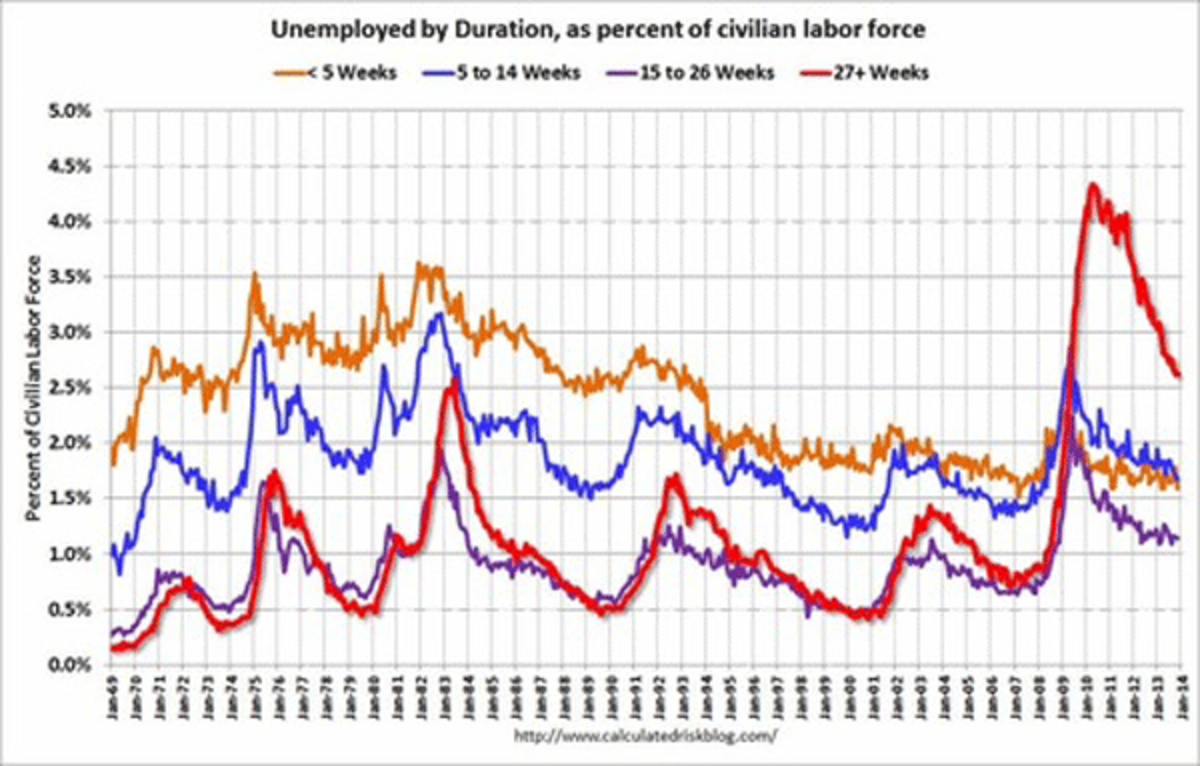
And that is about to get worse. Republicans in Congress have insisted that the government should stop giving benefits to the long-term unemployed. More conservative Republicans, like Rand Paul, do not support unemployment benefits beyond 26 weeks. That approach ignores the new reality of unemployment. Since 1969, at any time only about one-third of the unemployed had been out of work for more than 14 weeks. Since the recent deep recession, however, more than half have been out of work for more than 14 weeks, and about 40% for more than 26 weeks. Cutting off benefits to families who can’t find work is cruel.

What makes a great nation? Perhaps we could compare nations to people. What makes a great person? Not being the strongest, although we give awards in competitions of strength. Not being the toughest, although boxing champions make millions of dollars. Not having the most money, although many people associate wealth with virtue.

Human greatness is about compassion, helpfulness, a willingness to serve others. The Christian Bible, often cited as the ultimate source of wisdom, offers a clear definition of greatness. In Matthew 20:26-27, Jesus said: “...whoever desires to be great among you, let him be your servant. And whoever desires to be first among you, let him be your slave.”

If the United States is the greatest nation on earth, as so many people claim, then why do we allow such misery to continue generation after generation? If the total number of billionaires made a country great, the US would be the undisputed world’s champ. But if we look at how nations treat their poor, how they insure that their children have enough to eat, how they help those who cannot find jobs, then we are among the world’s chumps.

Steve Hochstadt
Jacksonville IL
Published in the Jacksonville Journal-Courier, January 14, 2014

Tuesday, January 7, 2014

Oklahoma!


We spent the final days of 2013 in Oklahoma City, celebrating the wedding of a “nephew”, son of a family to which my family has been closely related for generations, in friendship if not in DNA. It was my first time in Oklahoma.

When we’re in a new city, we walk around and go to museums. Walking around is not so easy in many American cities. There were no sidewalks on the busy road near our hotel. But we could drive to a small park in the center of Oklahoma City. There is a wide grassy field, a ring of trees, and a broad reflecting pool at the former site of the Murrah Building. There are also jagged concrete walls, the few pieces still standing 19 years after it was blown up by Timothy McVeigh on the morning of April 19, 1995, with the help of Terry Nichols and the encouragement of thousands of Americans in white supremacist, Christian Identity, government-hating organizations. In carefully planned rows facing the pool, within the footprint of the Murrah Building, sit 168 empty chairs with the names of everyone killed that day.

The park was peaceful. A park ranger answered our questions with clear and thoughtful stories. But we had even more questions, the pool had floating ice and the National Memorial Museum stood just a few feet away, in the damaged and repaired former Journal Record newspaper building.

We sat in a small room and listened to a recording of the Water Resources Board hearing that had begun at 9:00 on April 19. Unlike the woman, the “bureaucrat”, who was explaining the proceedings to all the participants, we knew what was coming. The explosion was still a shock, but it prepared me to see the hundreds of photographs of American faces, amidst fire and rubble, that the Museum uses to convey the human disaster that followed. In one room, a photo of each of the victims is displayed.

The park looked different when we came out of the museum. The chairs now had faces and personalities. The whole city looked different. We knew something more, felt something more, about the buildings in downtown Oklahoma City, about the people who lived in and near the city, about violent things that even a wedding can’t make you forget.

We visited another unique museum, the National Cowboy & Western Heritage Museum, at the top of the list of the state’s top museums. It used to be the National Cowboy Hall of Fame, and great cowboys are all around, real ones and Hollywood imitations, statues and paintings and artifacts from 200 years of the Western cowboy experience. The name has been changed and now both cowboys and Indians are honored. Towering above visitors as they enter the building is James Earle Fraser’s gigantic sculpture of a muscular Plains Indian, at “The End of the Trail”. The colorful, varied, and intricate art of and about Native Americans mingles with cowboy themes, just as they lived next to each other for hundreds of years.

Most of that history was violent. Cowboys and Indians might have mostly been competitors, but it was soldiers who drove Native Americans westward across the country, on behalf of the US government. Those who didn’t die were confined and their culture was attacked, to be replaced by the superior civilization of the whites.

For Native Americans, the US government was the enemy. It carried out the popular wishes of white America, against Natives, against Africans and their descendants, against immigrants, especially if they were not white.

Now all those excluded people are part of America. White America and non-White America have been coming to terms my whole life, and that process will continue.

Some people oppose the full and equal inclusion of all Americans. Timothy McVeigh was the deadliest in a long line of Americans who have used public terror to attack “the government”. By “government”, McVeigh and people who share his ideas actually mean the whole American society whose government has changed so much in the last half century. McVeigh followed the bible of right-wing fanatics, the “Turner Diaries”, which claim that there is no way to destroy “the Jewish-liberal-democratic-equalitarian plague . . . without hurting many thousands of innocent people.” When McVeigh planned his crime, he set out to kill the government employees who help the elderly get their Social Security payments, who recruit for our armed forces, who enforce our laws.

McVeigh said, “I believe we are slowly turning into a socialist government. The government is continually growing bigger and more powerful and the people need to prepare to defend themselves against government control.” You can hear similar words from a whole flock of conservative politicians. You can read in your local paper about “government bureaucrats” who are responsible for America’s decline.

Government can be the enemy, as it was for the Native Americans. But it isn’t any more. Those who can’t tell the difference create the atmosphere for fanatics to take up violence against people who do our public work, people like us.

Steve Hochstadt
Jacksonville IL
Published in the Jacksonville Journal-Courier, January 7, 2014